
Mrs. Reynolds
Week of: September 8th
Everything You Need to Know This Week:
- Labor Day-No School: Monday, September 7th
- Check your child's backpack for their Friday Journal. Don't forget to write in your student's Friday Journal and return it to their backpack.
- Spirit Wear Day: Friday, September 11th
- Please return ALL homework on Friday, September 25th. Thank you!
- We started our fundraiser! You can register your student at mybooster.com
- Boosterthon Fun Run (Prek-5th): Wednesday, September 16th
Important Information:
- Music is our rotation for STEAM this week! Friday specials this week: Character Ed.
- Be sure to check your student's Math and Reading teacher's websites:
- Mystery Reader Sign-Up: Coming Soon!
- Please make sure your student is wearing comfortable shoes for PE.
- Please send your student with a labeled water bottle and a nut free snack daily.
- To avoid lost or broken student items, please leave toys and personal items at home.
- Please label all student items with your student's name & grade level.
- Please keep checking your student's Thursday Folder and make sure they bring it back to school.
- Please read your student's Friday Journal, write them a note back, and make sure they bring it back to school.
- Dress for the weather! Don't forget labeled coats, hats, and gloves when necessary.
- We will go outside if the temperature "feels like" it's above 20 degrees, so please have students bring coats, boots, and cold weather gear as needed.
- Your student's Homework Folder will go home on Fridays and it is due the next Friday.
- On the back of your student's Homework Folder, they have their Clever QR Code. Your student can go onto Clever at home and access reading and math resources!
SPECIALS & STEAM Schedule:
STEAM Rotation:
TECH: Red
ART: Orange
STEM: Green
MUSIC: Blue
Upcoming:
- Curriculum Night (K-5th): Thursday, September 3rd
- Labor Day, No School: Monday, September 7th
- Spirit Wear Day: Friday, September 11th
- Jersey Day: Monday, September 14th
- Boosterthon Fun Run (PreK-5th): Wednesday, Sept. 16th
- PD Day (No school for students): Monday, September 21st
- Dress of Choice: Friday, September 25th
- Parent Teacher Conferences (Regular School Days): October 6th & 8th (4:15-8pm)
- End of Quarter 1: Thursday, October 8th
- Spirit Wear Day: Thursday, October 8th
- Comp Day (No school): Friday, October 9th
- Fall Break (No school): October 12th-16th
- Individual Picture Retake Day: Monday, Oct. 19th
- Elem. & PreK Class Picture Day: Tues. Oct. 20th
- Pay for Dress of Choice: Wednesday, Oct. 21st
- Dress of Choice: Friday, October 30th
- Fall Party (PreK-5): Friday, October 30th
Weekly Curriculum:
Mrs. Reynolds' Reading Skills Group: Skills 1
- Tricky Words and Spelling Alternatives
- Two-Syllable Words with Short Vowels
- Tricky Spelling ‘g’
- Tricky Spelling ‘c’
- Tricky Spelling ‘s’
- Review: Sound/Spellings
- Spelling Assessments
- The Cat Bandit Readings
- Freckle Juice chapter book reading & journal response
Short O
Spelling Test: Friday, September 11th
- lost
- mop
- stop
- mom
- dog
- blob
- frog
- job
- drop
- plop
Mrs. Reynolds' Math Skills Group: Module 1
- Group Tens as Hundreds
- Understand 3-Digit Numbers
- Represent 3-Digit Numbers
- Represent Numbers with Hundreds, Tens, and Ones
- Place Value to 1,000
Writing: Handwriting, Journal Writing, Writing Foundations
-
- Handwriting Practice
- Review Paragraph Conventions and Writing
- Writers Workshop
- Review basic writing foundations
Lesson 1: The Fisherman and His Wife
Lesson 2: The Emperor’s New Clothes
Lesson 3: Beauty and the Beast, Part I
Lesson 4: Beauty and the Beast, Part II
Pausing Point
Lesson 5: Paul Bunyan
Lesson 6: Pecos Bill
Lesson 7: John Henry
Lesson 8: Casey Jones
Domain Review
Domain Assessment
History: Making the Constitution
- Through analogies to familiar settings—the family, the school, the community—discuss some basic questions regarding the American government, such as: “What is government?“
- “What are some basic functions of American government?“ (Making and enforcing laws; settling disputes; protecting rights and liberties, etc.)
- The American government is based on the Constitution, the highest law of our land.
- James Madison, the “Father of the Constitution”
- Government by the consent of the governed: “We the people”
Science: Exploring Land & Water
- Hills, mountains, valleys, rock arches, plains, geysers, volcanoes, sand dunes, and beaches are types of landforms.
- Landforms can be created quickly or slowly.
- Quick changes to landforms include rockslides, landslides, mudslides, floods, earthquakes, and volcanic eruptions.
- Wind and water can erode rock, sand dunes, and beaches.
- There are different solutions to prevent water from changing the shape of rock and to prevent sand erosion.
- Glaciers are frozen forms of water.
- Flowing water moves earth materials.
- The land and water features of an area can be modeled.
- Water soaks into the ground.
- Geysers and volcanoes bring underground materials to Earth’s surface.
- Sand landforms include dunes and beaches.
- Sand dunes and beaches are formed in different ways.
Daily Schedule Room 203:
| 8:00-8:20 |
Arrival - Morning Work |
| 8:20-9:05 |
CKLA Skills
|
| 9:05-9:50 |
Writing
|
| 9:50-10:05 |
Handwriting |
| 10:05-10:45 |
STEAM: TECH/ART/STEM/MUSIC |
| 10:50-11:10 | Recess |
| 11:10-11:30 | Lunch |
| 11:35-12:35 | Math |
| 12:35-1:30 | Knowledge/History/Science |
| 1:35-2:15 | Specials: Library/PE/Spanish/Character Education |
| 2:15-2:45 | WIN (What I Need) |
| 2:45-3:00 | SSR (Sustained Silent Reading) |
| 3:00-3:20 | Recess |
| 3:25-3:30 | Read Aloud & Pack Up |
| 3:30 | Dismissal |
Parent Resources:

DIBELS Reading Assessment: is administered three times a year and also continuously monitored throughout. You will be receiving the results in Thursday folders after each benchmark.
- Want to know more about DIBELS click here: Parents Guide to Dibels
- Want to know more about NWEA click here: Family Guide To NWEA & Family Tool Kit for NWEA
- EPIC books: https://www.getepic.com/sign-in (Lots of great online books to read we will use this in class.)
- Reading Rockets: Reading Rockets Articles & Tips for Reading at Home
- Vooks: Animated Video Books for Students to Read Along With
- Phillip S Miller Library: Library Parent Resources
- Storyline Online: Storyline Read Alouds
- Prodigy: Prodigy Practice for Math & Reading
- Boddle: Boddle Math (students LOVE this)
- Prodigy: Prodigy Practice for Math & Reading
- Xtra Math: https://home.xtramath.org/ (great for fact practice)
- Khan Academy: Kahn Academy (Great for math support with videos that explain skills and concepts)
A Quick Note for My Class:
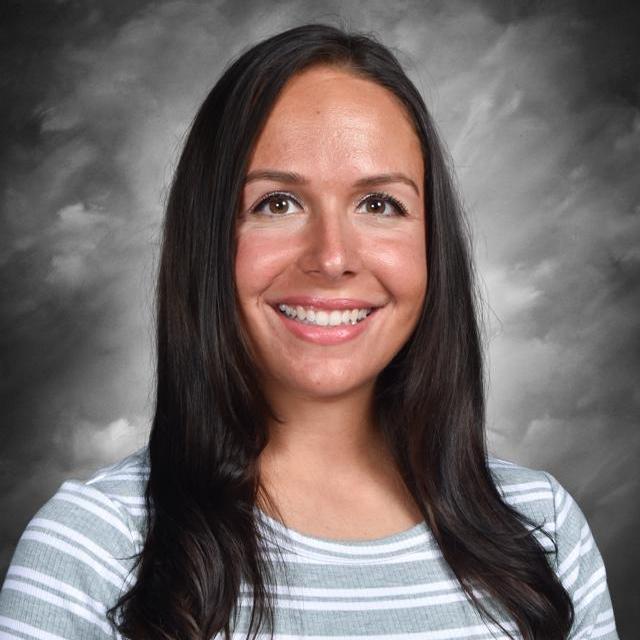
Meet Mrs. Reynolds:
3rd Grade. It is my passion working with children and helping them learn and grow.
Degree in Elementary Education. Before that, I graduated with high honors from the College of
Southern Nevada with an Associate of Arts Degree in Elementary Education.