

Mrs. Savic's Second Grade Class
Week of: September 8th-September 11th
Everything You Need to Know This Week:
- Labor Day/No School: Monday, September 7th
- Spirit Wear Day: Friday, September 11th
- Spelling test: Friday, September 11th
- Spelling Words (short o): lost, mop, stop, mom, dog, blob, frog, job, drop, plop
- Boosterthon Fun Run (Prek-5th): Wednesday, September 16th
- Please return ALL homework on Friday, September 25th. Thank you!
- Don't forget to write in your student's Friday Journal and return it to their backpack.
- We started our fundraiser! You can register your student at mybooster.com.
- TECH is our rotation for STEAM this week! Friday specials this week: Library
- Scholastic Book Order: Please visit www.scholastic.com and place your order online by using our special class code 2KPO6.
FRIENDLY REMINDERS:
- Please write in your student's Friday Journal and return it to their backpack.
- Please make sure your student is wearing comfortable shoes for PE.
- Please keep sending two nut-free snacks and a filled water bottle with your child daily.
- Each week, don't forget to empty out your child's Thursday Folder. Have your child return it to school on Friday.
- Please check your student's math and reading teacher's page to stay up to date on homework and what your student is working on in class.
- Dress for the weather! We will go outside if the "feels like" temperature is above 20 degrees, so please have your child bring coats, boots and cold weather gear as needed.
- Please remember to label your child's coats, boots, gloves, etc.
IMPORTANT INFORMATION:
- To avoid lost or broken student items, please leave toys and personal items at home.
- Please label all student items with your student's first and last name & grade level.
- Dress for the weather! Don't forget labeled coats, hats, and gloves when necessary.
STEAM & SPECIALS SCHEDULE:
STEAM Rotation: (Art, STEM, Music, Technology)
ART: Red
STEM: Orange
MUSIC: Green
TECHNOLOGY: Blue
SPECIALS:
Monday: PE
Tuesday: Spanish
Wednesday: Character Education
Thursday: Library
Friday: Rotates (PE, Spanish, Character Education, Library)
Upcoming:
September:
- Curriculum Night (K-5th): Thursday, September 3rd
- Labor Day/No School: Monday, September 7th
- Spirit Wear Day: Friday, September 11th
- Jersey Day: Monday, September 14th
- Boosterthon Fun Run (Prek-5th): Wednesday, September 16th
- PD Day (No school for students): Monday, September 21st
- Dress of Choice: Friday, September 25th
October:
- Parent Teacher Conferences (Regular School Days): October 6th & 8th (4:15-8pm)
- Spirit Wear Day: Thursday, October 8th
- End of Quarter 1: Thursday, October 8th
- Comp Day/No School: Friday, October 9th
- Fall Break/No School: October 12th-16th
- Pay for Dress of Choice: Wednesday, October 21st
- Dress of Choice and Fall Party (PreK-5th): Friday, October 30th
WEEKLY CURRICULUM & HOMEWORK:
Mrs. Savic's Reading (CKLA) Skills Group: Skills 1
- Lesson 12 Review: Tricky Words and Spelling Alternatives
- Read “The Chicken Nugget”
- Lesson 13 Basic Code Review: Two-Syllable Words with Short Vowels
- Reread “The Chicken Nugget”
- Lesson 14 Review: Tricky Words and Tricky Spelling ‘g’
- Read “The Snack Mix”
- Lesson 15 Assessment and Review: Spelling Assessment and Tricky Spelling ‘c’
- Reread “The Snack Mix”
- Lesson 16 Review: Spelling Alternatives
- Read “The Ham”
- Lesson 17 Review: Spelling Alternatives and Tricky Words
- Read “The Fish”
- Lesson 18 Review: Tricky Words and Spelling Alternatives
- Read “The Milk”
- Lesson 19 Review: Tricky Words
- Reread “The Milk”
- Lesson 20 Assessment and Review: Spelling Assessment and Tricky Spelling ‘s’
- Lesson 21 Review: Sound/Spellings and Tricky Words
- Read “The Chips”
- Lesson 22 Assessment: End-of-Unit Assessment
- Please be sure your child is reading at least 20 minutes a day.
Mrs. Savic's Math Skills Group:
- Lesson 2: Understand 3-Digit Numbers
- Lesson 3: Represent 3-Digit Numbers
- Lesson 4: Represent Numbers with Hundreds, Tens, and Ones
- Lesson 5: Place Value to 1,000
- IXL Math
- Prodigy
- Xtra Math
- Please be sure your child is practicing their math facts at home.
Writing:
Current Writing Topic: Handwriting and Journal Writing
- Handwriting Practice
- Review Paragraph Conventions and Writing
- Writers Workshop
CKLA Knowledge: Domain 1: Fairy Tales and Tall Tales
Lesson 1: The Fisherman and His Wife
Lesson 2: The Emperor’s New Clothes
Lesson 3: Beauty and the Beast, Part I
Lesson 4: Beauty and the Beast, Part II
Pausing Point
Lesson 5: Paul Bunyan
Lesson 6: Pecos Bill
Lesson 7: John Henry
Lesson 8: Casey Jones
Domain Review
Domain Assessment
History: Constitution
- American Government is based on The Constitution
- James Madison, the "Father of The Constitution"
- Government by the consent of the governed: "We the People."
Science: Landforms and Bodies of Water
- Hills, mountains, valleys, rock arches, plains, geysers, volcanoes, sand dunes, and beaches are types of landforms.
- Landforms can be created quickly or slowly.
- Quick changes to landforms include rockslides, landslides, mudslides, floods, earthquakes, and volcanic eruptions.
- Wind and water can erode rock, sand dunes, and beaches.
- There are different solutions to prevent water from changing the shape of rock and to prevent sand erosion.
- Glaciers are frozen forms of water.
- Flowing water moves earth materials.
- The land and water features of an area can be modeled.
- Water soaks into the ground.
- Geysers and volcanoes bring underground materials to Earth’s surface.
- Sand landforms include dunes and beaches.
- Sand dunes and beaches are formed in different ways.
Parent Resources:
Reading every day is important! Look at the statistic below:

DIBELS Reading Assessment: is administered three times a year and also continuously monitored throughout. You will be receiving the results in Thursday folder after each benchmark.
- Want to know more about DIBELS click here: Parents Guide to Dibels
NWEA (MAPS) Assessment: is also administered three times a year. You will receive these results as well in your child's Thursday folder.
- Want to know more about NWEA click here: Family Guide To NWEA & Family Tool Kit for NWEA
Reading Resources: Some of these may cost money, but I wanted you to know they are out there.
- EPIC books: https://www.getepic.com/sign-in ( we will use this in class.)
- Reading Rockets: Reading Rockets Articles & Tips for Reading at Home
- Vooks: Animated Video Books for Students to Read Along With
- Phillip S Miller Library: Library Parent Resources
- Storyline Online: Storyline Read Alouds
- Prodigy: Prodigy Practice for Math & Reading (another student favorite)
Math Resources
- Boddle: Boddle Math (students LOVE this)
- Prodigy: Prodigy Practice for Math & Reading (another student favorite)
- Xtra Math: https://home.xtramath.org/ (great for fact practice)
- Khan Academy: Kahn Academy ( great for math support with videos that explain skills and concepts)
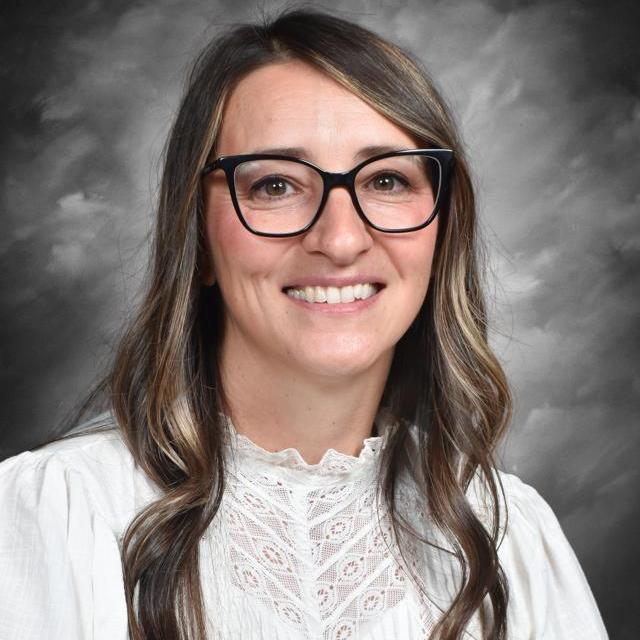
MEET MRS. SAVIC
Welcome to 2nd grade! My name is Branka Savic, and I am pleased to welcome you to the 2026-2027 school year. This is my 20th year in education, and my 3rd year teaching second grade here at Aspen View Academy. I have experience working with preschool students, kindergarten, and grades 2nd through 4th. I look forward to meeting you and getting to know you this school year. We are going to have a wonderful year together!
DAILY SCHEDULE
8:00-8:20 Welcome/Morning Work
8:20-9:05 CKLA Skills
9:05-9:50 Writing
9:50-10:05 Handwriting
10:05-10:45 STEAM
10:50-11:10 Recess
11:10-11:30 Lunch
11:35-12:35 Math
12:35-1:30 Knowledge/History/ Science
1:35-2:15 Specials
2:15-2:45 WIN (What I Need)
2:45-3:00 SSR (Sustained Silent Reading)
3:00-3:20 Recess
3:25-3:30 Read Aloud& Pack up
3:30 Dismissal